

A consumer app as a proving ground
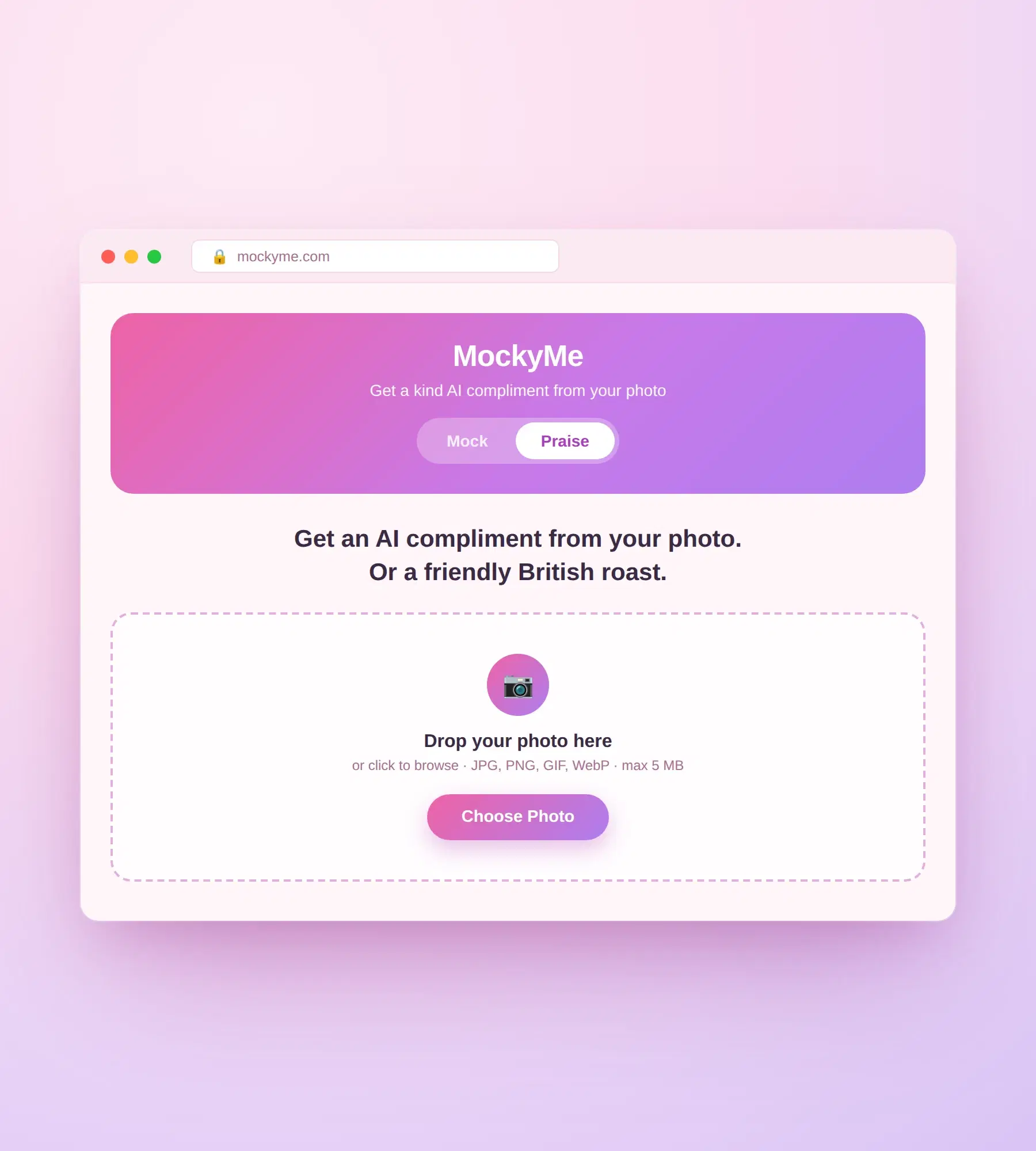
MockyMe is a small free web app: upload a photo and get a kind, AI-written compliment back in seconds, or flip it into Mock mode for a dry, British-style ribbing. There is no account and no signup.
It is a Komforan side project, and it exists to be a working example of how modern AI vision can be wired into a finished consumer product rather than a demo. That framing matters, because the interesting engineering in an AI feature is almost never the model call. It is everything around it: what the product refuses to do, what happens when the output is bad, and what it costs you when nobody is paying.
Two modes, both specific on purpose
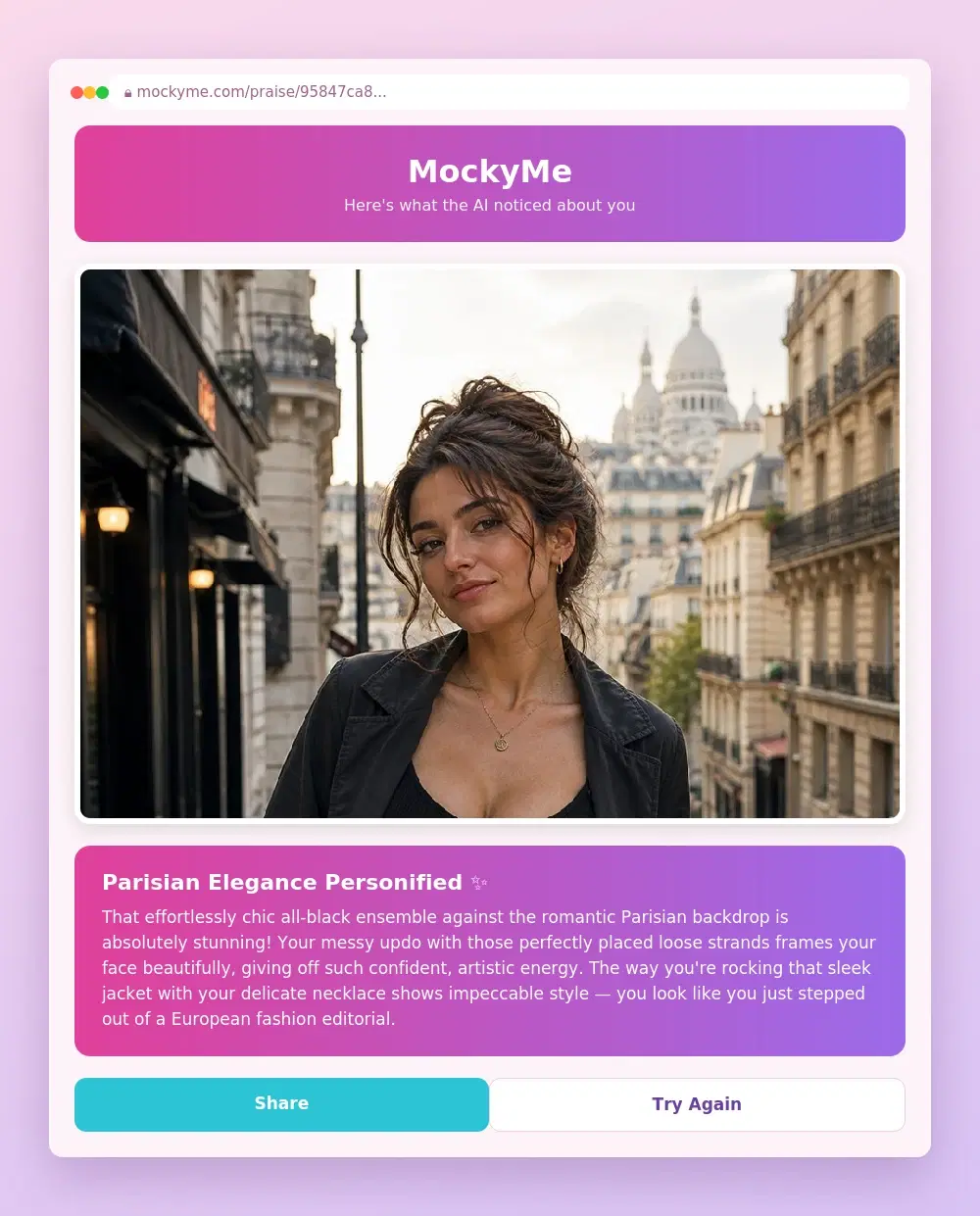
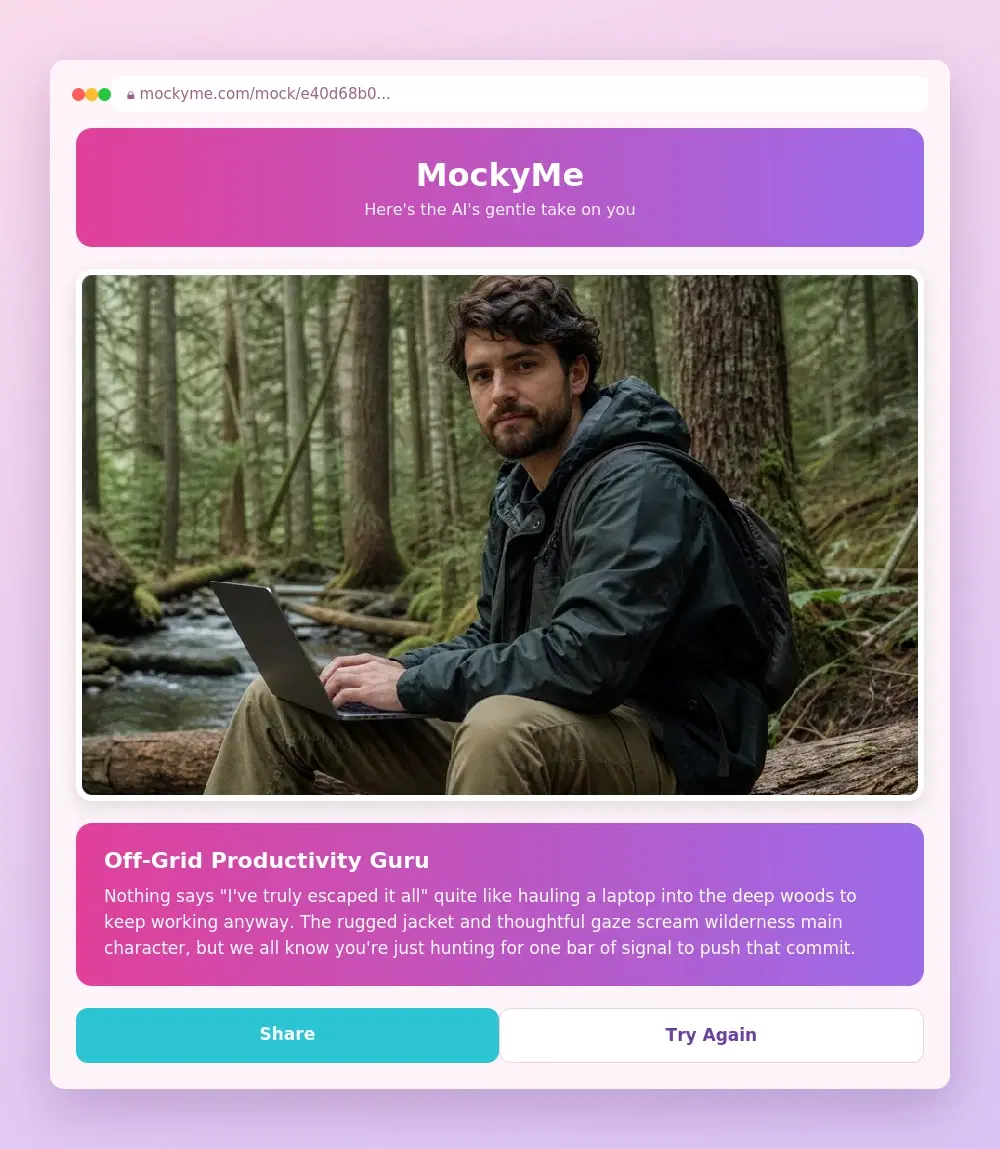
Praise mode returns a short compliment that picks out something actually visible in the photo — a jacket, a posture, the colour of the wall behind you. Mock mode returns a dry observation in the register of a witty friend at the pub rather than an insult.
Both are tuned to be specific rather than generic, and that is a prompt-design decision with a clear rationale: only a specific line lands. "You look great" reads as a form letter and tells the user immediately that nothing actually looked at their photo. "That jacket is doing a lot of work" proves the system saw something. The difference between those two outputs is not model capability, it is the instructions wrapped around it.
Guardrails are the product, not a wrapper
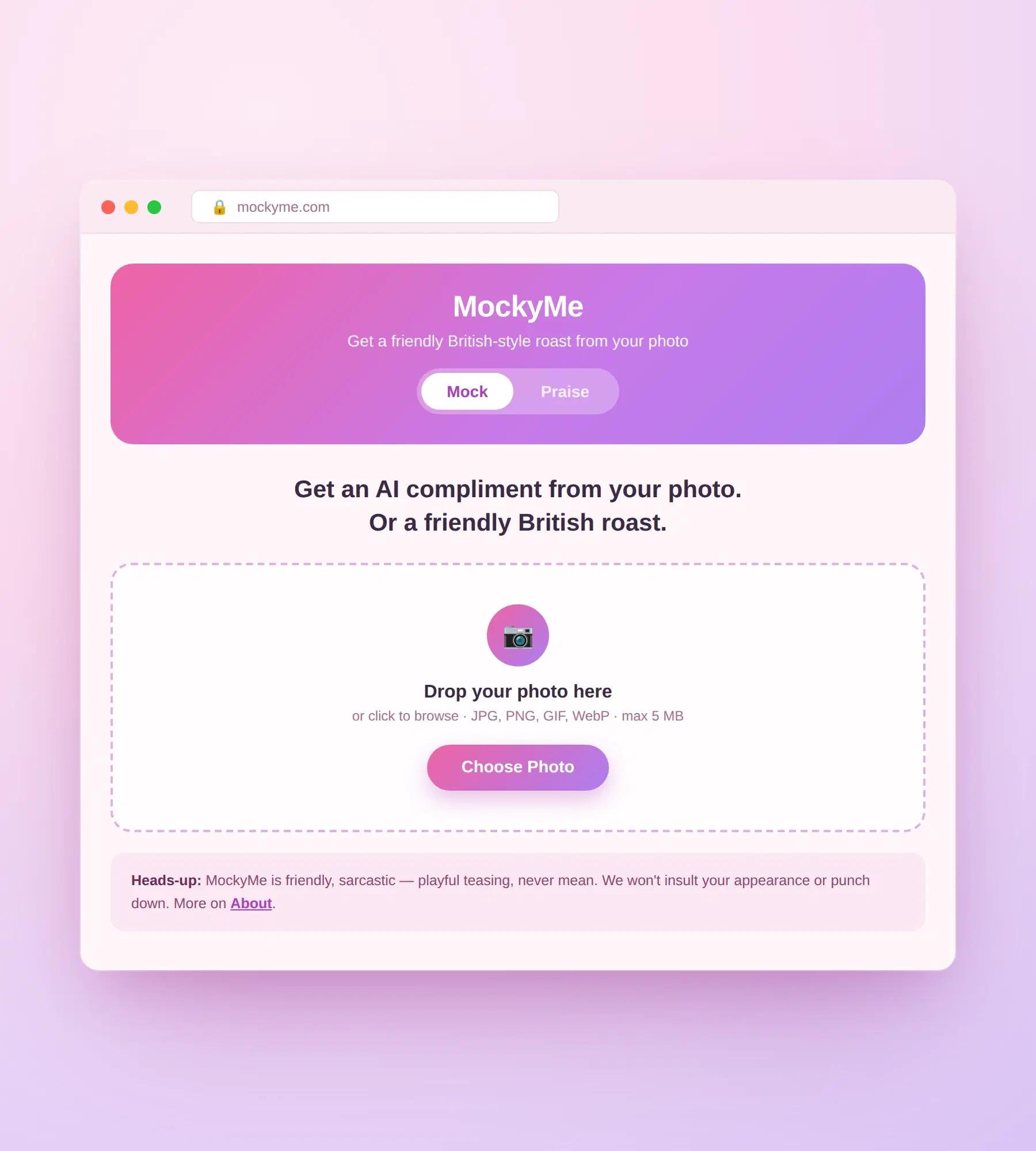
MockyMe refuses to comment on things the user did not choose: face, body, age. The stated principle is that it will not punch down, and a mean result is treated as a bug to be fixed rather than an amusing edge case. There is a dedicated page explaining exactly where the line sits between sarcasm and cruelty.
For a business evaluating whether to put an AI feature in front of its own customers, this is the part worth reading. The anxiety is never "can the model produce text" — it obviously can. The anxiety is what it says on the worst day, to the least forgiving user, in a screenshot that ends up somewhere public. MockyMe is a small, low-stakes demonstration that we treat that as a design problem to be solved up front rather than a support ticket to be handled later.
Decisions that shaped the build
Requiring no account is a conversion decision with a real trade-off. It removes the biggest drop-off point between arriving and seeing the product work, and in exchange you give up the ability to identify a returning user or build anything on top of an account. For a product whose whole job is to demonstrate a capability in under a minute, that is the right side of the trade.
Results live at their own shareable permalinks, so a result can be sent to someone directly rather than described. That is both a growth loop and a source of indexable pages, which is a nice property to get from a feature users want anyway.
Uploads are constrained to JPG, PNG, GIF and WebP at a maximum of 5 MB, and the product is surrounded by genuine supporting content: how it works, why compliments matter, a field guide to British sarcasm, a photo-tips checklist, an explanation of how AI vision works, and an FAQ. The app is monetised with advertising, and the FAQ says so plainly rather than hoping nobody asks.
Why it matters for client work
MockyMe is the first step in a sequence. The vision pipeline proved out here is the one that went on to do commercial work in Tolkra, our AI document-extraction product — a free toy with no customer data was a far better place to learn how these models behave than a client's invoices.
If you are weighing up an AI feature for your own product, this is the pattern we would recommend: build the smallest honest version, put it somewhere real, and find out what it does badly before anything depends on it.
Highlights
- Vision AI on AWS Bedrock
- No account required
- Two modes — praise and playful mock
We built this the same way we build every client project. See how the one-day web development process works, or what a fixed-price website build costs.